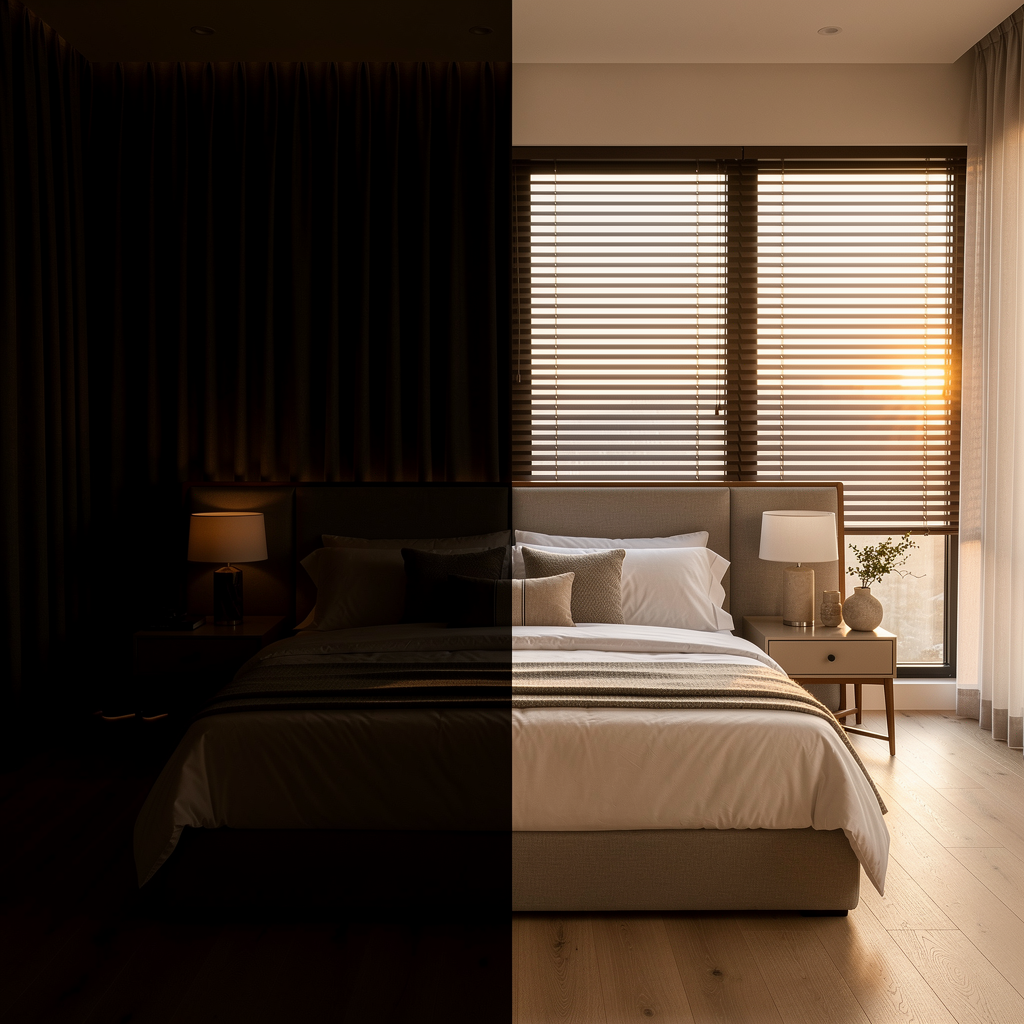
Sleep is one of the fastest ways to turn a good stay into a five-star review. In vacation rentals, the right window covering can quietly improve comfort, reduce complaints, and strengthen your guest experience without adding much operational complexity.
Why window light matters so much in short-term rentals
Guests do not experience a home the way owners do. A bedroom that feels bright and airy during the day can become a sleep problem at dawn, especially in east-facing rooms, urban settings with streetlights, or family stays where children wake early. For hosting businesses, sleep quality is not a minor amenity; it affects reviews, repeat bookings, and ultimately rental yield.
Industry data shows why this matters. Airbnb’s 2024 release on its global marketplace reported continued growth in guest demand across more than 5 million hosts worldwide, while STR/CoStar’s hotel industry reporting in 2025 continued to show that sleep-related comfort and room quality remain key drivers of satisfaction in competitive lodging markets. These signals matter for property management because travelers are comparing a short-term rental not only to other homes, but also to hotels that heavily market darkness, quiet, and rest.
There is also a practical sleep angle. The Sleep Foundation notes that light exposure can interfere with melatonin production and delay sleep onset, which is why effective room-darkening is especially valuable in bedrooms used for short-term rentals. For hosts, that means choosing between blackout curtains and blinds is not just a design decision; it is a sleep strategy.
Blackout curtains: the strongest option for darkness
Blackout curtains are usually the best choice when your priority is maximum room darkening. They are made from dense fabric or layered materials that block more light than standard drapes, and when properly installed, they can significantly reduce early-morning sun, street glare, and light pollution.
For vacation rentals, blackout curtains are especially effective in bedrooms, nursery spaces, or any room facing strong sunrise light. They also add a softer, more upscale look than many blinds, which can improve the visual appeal of listing photos and help create a hotel-like atmosphere that guests often associate with rest and comfort.
Another advantage is acoustic softness. While blackout curtains are not a true soundproofing solution, heavier fabric can slightly dampen noise and make a room feel calmer. In busy city rentals, that small improvement can strengthen the overall guest experience.
The tradeoff is operational. Curtains gather dust more easily than hard-surface window coverings and can require more frequent cleaning. In humid climates, they may also retain odors if ventilation is poor. For property management, that means they work best when the host has a simple cleaning plan and durable hardware.
Blinds: flexible, neat, and easier to maintain
Blinds offer a different kind of value. They are often easier to wipe down, can look cleaner in minimalist interiors, and allow more precise control of light than curtains alone. For high-turnover vacation rentals, that can matter because blinds are generally simpler to inspect and maintain between guests.
Blinds are a good fit when you want flexibility. Guests can tilt them to let in daylight while reducing direct glare, which works well in living areas or secondary bedrooms. In smaller rentals, they also save visual space because they sit close to the window and do not take up wall area the way curtains do.
However, blinds rarely outperform blackout curtains when full darkness is the goal. Standard blinds often leave light gaps at the edges and between slats. Even well-fitted blinds may still allow enough sunrise light to wake sensitive sleepers, which can become a problem in vacation rentals marketed to light sleepers, families, or business travelers.
From a maintenance perspective, blinds have their own drawbacks. Corded systems can wear out, slats can bend, and low-cost models may rattle or look tired after repeated guest use. In other words, blinds are convenient, but they are not always the most luxurious sleep solution.
What guests actually want in a sleep setup
Guests usually care less about the technical label and more about whether the room is dark, comfortable, and easy to sleep in. For hosting professionals, this means the best choice often depends on the property type, the guest mix, and the local environment.
In family-friendly vacation homes, blackout curtains can help children sleep later and reduce early-morning wake-ups. In urban apartments, they can block streetlights and improve privacy. In compact studio layouts, blinds may be better in daytime living areas where you want flexibility and a lighter visual feel. The strongest approach in many properties is to use both strategically: blackout curtains in primary bedrooms and blinds in common areas.
That is especially relevant in property management because sleep complaints are often not about one product alone. They are about a chain of details: light, bedding, mattress comfort, room temperature, and noise. Window coverings are one of the highest-impact upgrades because they solve a problem guests notice immediately.
Blackout curtains vs. blinds: which is better for vacation rentals?
If your main goal is the best possible sleep, blackout curtains usually win. If your main goal is easy upkeep and a cleaner, lighter design, blinds may be the better operational choice. The right answer depends on your property’s positioning and guest expectations.
- Choose blackout curtains for bedrooms where guests need deep darkness, such as east-facing rooms, city units, and family suites.
- Choose blinds for rooms where flexible light control and low-maintenance cleaning matter more than total blackout.
- Use layered solutions when possible: blinds for daytime control and blackout curtains for true sleep protection.
This layered approach is increasingly common in higher-performing short-term rentals because it serves both practical maintenance needs and stronger guest comfort. It also supports stronger photos, since a room can look polished during the day while still offering serious sleep performance at night.
Practical design details that make the difference
Even the best curtains or blinds can underperform if they are installed poorly. Small details often determine whether guests experience “good enough” darkness or truly restful sleep.
- Extend curtains beyond the window frame so light leaks are minimized at the sides.
- Mount curtain rods higher and wider than the window for better coverage and a more luxurious look.
- Pair blinds with side panels if the room gets strong morning sun but you still want a neat, flexible setup.
- Choose durable fabrics and hardware that can withstand repeated use, cleaning, and turnover cycles.
- Test the room at dawn before publishing the listing so you can see exactly what guests will experience.
These small improvements can have outsized value in vacation rentals because guests often judge sleep quality within the first night. A room that stays dark until a reasonable hour can feel thoughtfully designed, even if the upgrade cost was modest.
How this choice affects reviews and revenue
Sleep is one of the most repeated themes in positive and negative lodging reviews. Guests rarely write long praise about a curtain, but they often mention “slept great,” “room was dark,” or “woke up too early because of sunlight.” That means window coverings can influence the language that shapes future bookings.
For owners focused on rental yield, the math is simple: stronger sleep comfort can support better ratings, and better ratings can support better occupancy and pricing power. In competitive markets, that advantage compounds over time. A modest investment in blackout curtains may return value through fewer complaints, stronger repeat stays, and better overall positioning against similar listings.
There is also a branding effect. Properties that feel intentionally designed for rest are easier to market as premium stays. In that sense, the right window solution is not just a utility item; it is part of the property’s value proposition.
Best practices for hosts
Hosts who want the best sleep setup can improve results by treating window coverings as part of a larger room strategy, not a standalone purchase.
- Match the solution to the room: blackout curtains in main bedrooms, blinds in flexible spaces, and layered systems in high-demand units.
- Prioritize blackout performance in sunrise-facing rooms, especially where guests are likely to sleep in later.
- Keep cleaning simple by selecting materials that fit your turnover schedule and housekeeping standards.
- Inspect for light leaks after installation and fix gaps before the first guest arrives.
- Market the benefit clearly in your listing description so guests understand the sleep quality advantage before booking.
For hosts managing multiple listings, standardizing window treatments across similar units can also simplify replacement, maintenance, and guest communication. That consistency is useful in property management because it reduces operational surprises and helps create a reliable brand experience.
The smartest choice for most vacation rentals
For most vacation rentals, blackout curtains are the stronger sleep solution in bedrooms because they deliver deeper darkness and a more comfortable rest environment. Blinds remain valuable where durability, simplicity, and flexible light control matter most, but they usually work best as part of a layered system rather than a standalone sleep feature.
In practice, the best hosts think like designers and operators at the same time. They choose what improves sleep, what survives turnover, and what supports the listing’s overall story. That balance is what turns thoughtful hosting into a better guest experience and, over time, a healthier rental yield.
Great stays are built from many small decisions, and window coverings are one of the quietest ways to make a big difference. If you are refining your own rental setup, consider how a darker, calmer room could elevate your next guest’s experience—and if you have your own lessons from the field, share your thoughts and join the hosting community.