The mattress in your short-term rentals can shape the entire guest experience in one night. In property management, it is one of the few purchases that directly affects reviews, repeat bookings, and rental yield.
For hosts, the challenge is simple but important: how do you choose a mattress that feels comfortable enough for guests while still being durable and cost-effective for the business? The best answer is rarely the cheapest option or the most luxurious one. It is the mattress that delivers consistent sleep quality, survives frequent turnover, and supports the economics of hosting.
Why Mattress Choice Matters More in STRs Than in Private Homes
In a private home, a mattress may serve the same sleeper every night. In short-term rentals and vacation rentals, it serves many different bodies, sleep positions, and expectations. That means the mattress must appeal to a wide range of guests, from side sleepers who need pressure relief to back sleepers who want support.
Industry guidance consistently points to medium-firm comfort as the most versatile choice. Sleepopolis notes that a medium-firm mattress is often the safest bet for Airbnb-style stays because it suits most sleepers and balances comfort with support[1]. Sleep Advisor similarly recommends medium-firm beds with durable, easy-to-clean materials for vacation rentals[2].
This matters because comfort is not just a hospitality detail. In hosting, sleep quality influences ratings, and ratings influence demand. A mattress that feels “good enough” in a hotel-like sense can be a strategic asset in STR performance.
The Best Balance: Comfort, Durability, and Cost
When hosts shop for a mattress, the cheapest option often creates hidden costs: sagging, complaints, early replacement, and lower guest satisfaction. On the other hand, overspending on luxury features may not improve reviews enough to justify the expense. The goal is to find a middle ground that supports both the guest experience and business efficiency.
Several rental-focused guides point to the same practical range: medium-firm foam or hybrid mattresses with strong durability at a moderate price point. National Mattress suggests that many hosts succeed with medium-firm foam or hybrid options in the roughly $400 to $600 range for budget-conscious setups, while other STR guides place the ideal value zone higher, around $500 to $900 for a queen size, depending on commercial use and longevity expectations[5][6].
The difference between those numbers is not a contradiction; it reflects different market positions and quality tiers. A lower-cost mattress may work for a lightly used unit, while a busier property may justify a higher upfront investment if it lasts significantly longer. One guide notes that a $1,000 mattress lasting 6 to 7 years in commercial use can offer better value than a $400 mattress that needs replacing after 2 years[6].
What Current Data Suggests About Guest Expectations
Recent rental and hospitality trends reinforce the importance of comfort. Sleep products published for 2026 consistently recommend hybrid mattresses for Airbnb and rental settings because they combine broad comfort with durability under frequent use[1][6]. Another recurring recommendation is a 10-year or longer warranty, although hosts should verify that the warranty still applies under commercial or STR use[1][6].
There is also a hygiene and turnover angle. A practical STR setup usually requires a mattress protector, washable bedding systems, and materials that can withstand repeated cleaning. One hosting guide recommends at least three sets of sheets per bed and emphasizes that mattress protectors are essential because replacing a stained mattress costs far more than buying proper protection[3].
For hosts, these details are not just operational preferences. They reduce downtime, simplify cleaning, and support a more professional property management process.
Recommended Mattress Types for Short-Term Rentals
Most experts converge on two strong options for STRs: hybrid mattresses and high-density foam mattresses. Hybrids combine coils and foam, which helps with airflow, support, and durability. Foam mattresses can also work well, especially when they are medium-firm, high-density, and made by a reputable brand with strong reviews[1][5][6].
A practical overview:
- Hybrid mattresses are often the best all-around choice because they balance comfort, support, and durability for frequent guest turnover[1][6].
- Medium-firm foam mattresses work well when the priority is broad appeal, simple setup, and easier shipping or delivery[2][3].
- High-density materials help resist body impressions and sagging, which is especially important in high-occupancy vacation rentals[5][6].
Thickness also matters. Some STR specialists recommend a mattress thickness of 10 to 12 inches, with a 12-inch profile often described as a sweet spot for short-term rentals because it feels substantial while still working well with standard linens[3][6].
How to Evaluate a Mattress Before You Buy
Before purchasing, look beyond the marketing language. A mattress can sound luxurious and still be a poor fit for hosting. Focus on the practical criteria that affect long-term performance in a rental setting.
- Choose medium-firm support unless your target guest demographic clearly prefers something different. Medium-firm beds are the most versatile for mixed sleep styles[1][2][5][6].
- Prioritize durability over novelty. Reinforced coils, dense foam layers, and strong edge support typically matter more than premium branding[6].
- Check return policies and warranty terms carefully, especially whether the warranty covers short-term rentals or commercial use[1][6].
- Read verified reviews for long-term comfort, not just initial softness. A mattress that feels great on day one may break down quickly under constant turnover[5].
- Confirm compatibility with protectors, fitted sheets, and your bed frame so setup and cleaning remain efficient[3][6].
Three Practical Strategies for Hosts
If you want a mattress decision that improves both guest experience and operational efficiency, these strategies are especially useful:
- Standardize by room type. Use the same mattress model across multiple rooms or units whenever possible. Standardization simplifies replacements, protects consistency, and makes property management easier.
- Invest in protection from day one. A waterproof, quiet mattress protector is not optional in short-term rentals. It helps preserve the mattress, reduces cleaning risk, and protects your rental yield by extending usable life[3][7].
- Rotate and inspect regularly. Some hosts recommend rotating the mattress every 2 to 3 months in higher-traffic units to reduce body impressions and extend durability[7].
- Match the mattress to the market. A premium urban listing may justify a higher-end hybrid, while a value-driven vacation rental may perform better with a strong mid-range model that offers reliable comfort without overcapitalizing[5][6].
Don’t Forget the Bedding Experience Around the Mattress
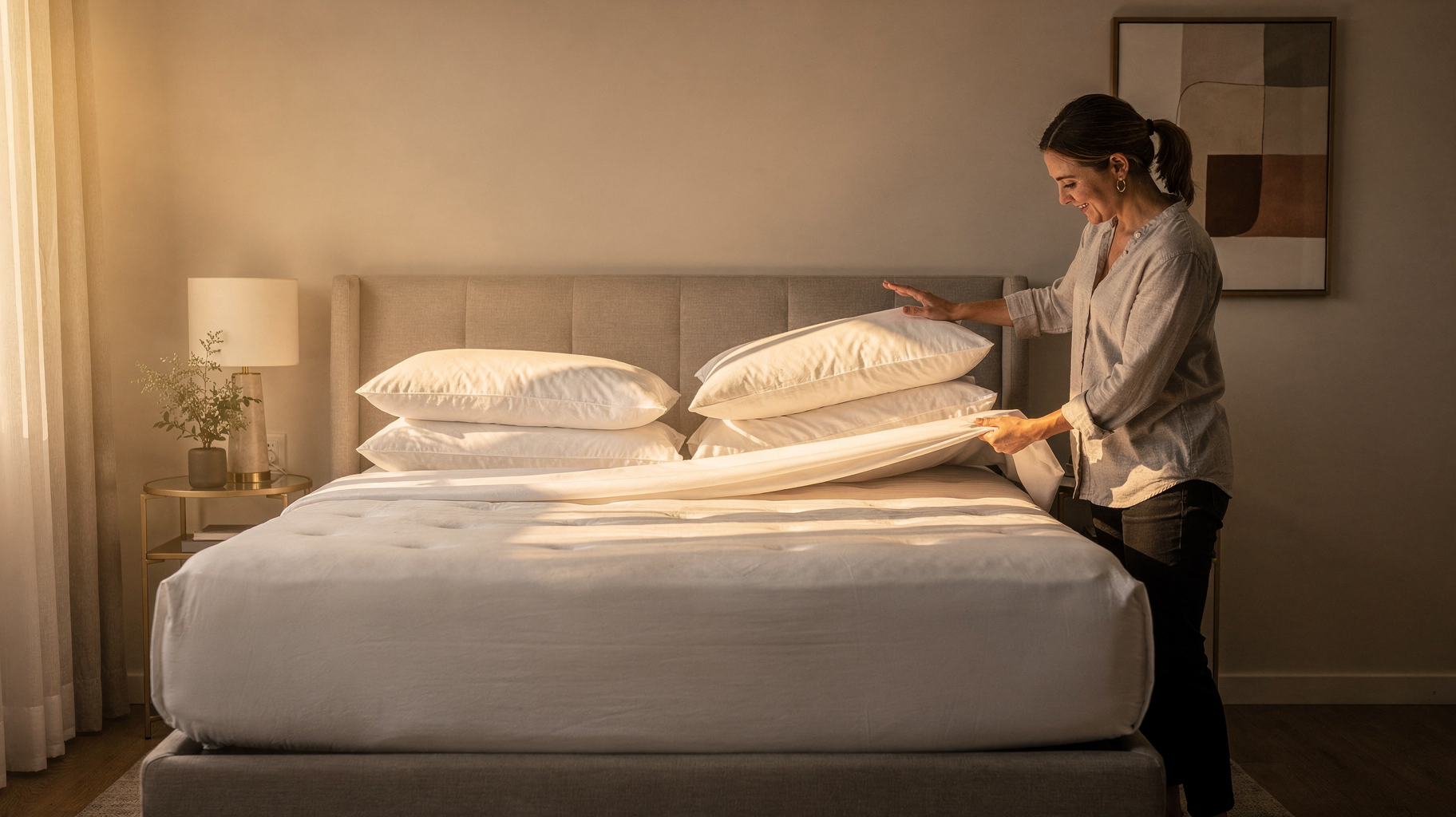
The mattress is central, but the surrounding bedding shapes how guests perceive it. Even a high-quality mattress can feel average if the linens, pillows, or protector make the bed noisy or uncomfortable. One STR guide recommends hotel-quality white sheets, multiple pillow options, and a clean, simple setup that feels fresh and easy to maintain[3].
This is where hosting becomes a system rather than a single purchase. A great mattress paired with breathable sheets, the right pillow mix, and a quiet protector can create a much better sleep experience than a more expensive mattress used poorly.
How Mattress Choice Affects Reviews and Profitability
Guests rarely leave detailed technical notes about foam density or coil systems. They do, however, mention whether they slept well, woke up sore, or felt the bed was too soft or too hard. That feedback matters because sleep complaints can affect star ratings, and star ratings affect booking confidence.
For that reason, mattress selection should be viewed as a revenue decision as much as a comfort decision. A reliable mattress reduces the risk of complaints, minimizes replacement frequency, and supports stronger occupancy over time. In that sense, the right bed can quietly improve both guest satisfaction and rental yield.
Hosts often underestimate how much a mattress contributes to perceived quality. Yet in many short-term rentals, the bed is one of the largest and most memorable pieces of furniture in the entire space. If it feels supportive, clean, and restful, the whole property feels more professional.
A Simple Buying Framework for Hosts
If you are narrowing down your options, use this decision framework:
- Budget: Avoid the absolute cheapest mattress unless the property has very low turnover.
- Feel: Aim for medium-firm as the default comfort profile.
- Construction: Favor hybrid or high-density foam for better durability.
- Maintenance: Choose a mattress that works well with protectors and easy laundering systems.
- Longevity: Look for strong warranties, durable materials, and proven review history[1][2][6].
In short-term rentals, the “best” mattress is not the one with the most impressive marketing or the softest showroom feel. It is the one that performs consistently, keeps guests comfortable, and holds up through the realities of hosting.
For thoughtful hosts, mattress selection is an opportunity to improve hospitality in a way guests will feel every night. When you balance cost and comfort with care, you build a better stay, a stronger reputation, and a more resilient hosting business. If you are refining your own setup, trust the process, keep learning from guest feedback, and share your experience with the hosting community.