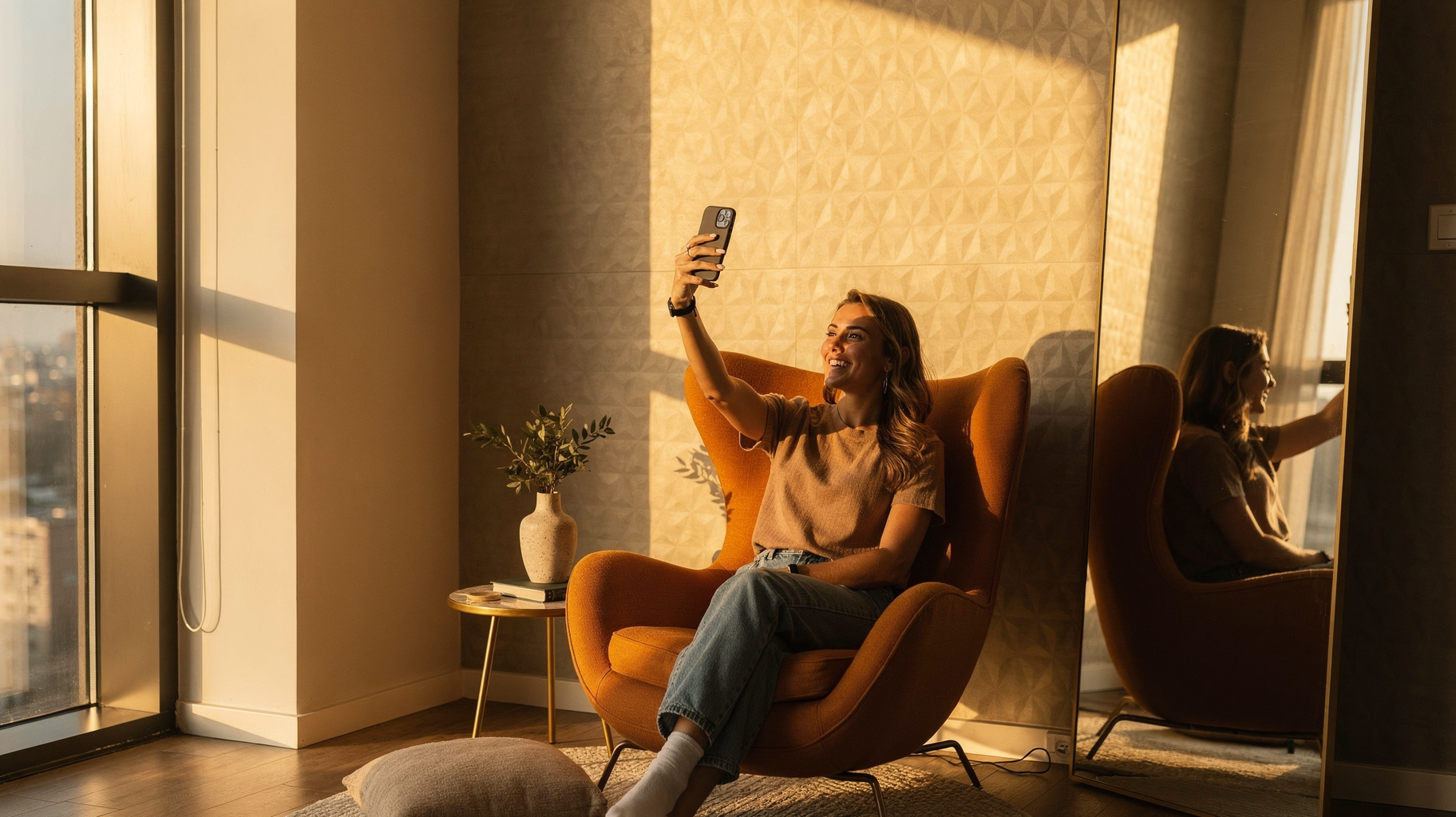
A well-designed selfie spot can turn a stay into a story guests want to tell. For hosts in short-term rentals and vacation rentals, that story can translate into stronger visibility, more memorable guest experience, and even better rental yield.
Why a Selfie Spot Matters in Modern Hosting
Travelers no longer just want a bed and a clean bathroom; they want moments worth posting. In property management, that means creating one visually distinctive corner that naturally invites guests to take photos, share them on social media, and remember your space long after checkout.
This matters because social content is now part of the booking journey. A recent Sprout Social report found that 90% of consumers use social media to keep up with trends and cultural moments, while 48% say they have made a purchase because of social media content. In hospitality, that behavior can influence how potential guests discover and trust a listing. Statista also reported that as of 2026, Instagram remains among the most-used visual platforms worldwide, making it especially relevant for photo-friendly rental marketing.
What a Selfie Spot Actually Is
A selfie spot is a planned visual feature in your rental that looks good on camera and feels authentic in person. It can be a mural, a statement chair, a window seat with a striking view, a neon sign, a styled coffee corner, or a small outdoor nook with flattering light. The best selfie spots are not random decorations; they are intentional design elements that support both aesthetics and the guest journey.
For hosts, the goal is not to turn the entire property into a photo set. Instead, focus on one or two memorable areas that fit the style of the home and the expectations of your target guests. That balance helps preserve comfort while still giving your listing a signature visual identity.
How to Design a Selfie Spot That Feels Natural
The most effective selfie spots feel effortless. They should fit the property’s style, local character, and overall branding rather than looking forced. A beachfront vacation rental might benefit from a bright lounge chair framed by ocean tones, while an urban loft might shine with a bold wall, industrial textures, and dramatic lighting.
Think in terms of layers: backdrop, lighting, focal point, and comfort. A great backdrop gives the photo structure. Good light makes skin tones and colors look clean. A focal point gives guests something to stand next to or sit beside. Comfort ensures people actually use the space rather than admire it from a distance.
Practical Design Ideas for Hosts
- Create a signature wall with paint, texture, wallpaper, or a mural that reflects the property’s personality and local culture.
- Use natural light by placing the selfie spot near a bright window, glass door, or outdoor opening, since photogenic lighting is one of the strongest drivers of shareable content.
- Add a recognizable prop such as a bold chair, woven swing, vintage mirror, or sculptural lamp that anchors the scene visually.
- Keep the area uncluttered so guests can frame themselves easily without distracting items in the background.
- Make the spot comfortable with a stool, cushion, bench, or chair so guests can linger, pose, and interact with the space naturally.
Lighting: The Hidden Factor Behind Share-Worthy Photos
Lighting can make or break a selfie spot. Natural light remains the most reliable option for vacation rentals because it flatters people and makes spaces feel more open. Industry photography guidance consistently recommends shooting during the day and using golden hour for exterior or window-facing features, since warmer light creates a softer, more inviting look. That advice aligns with broader short-term rental photography best practices that emphasize natural lighting and clean, balanced images for stronger listing appeal.
If natural light is limited, invest in soft, warm artificial lighting that complements the room rather than overpowering it. Avoid harsh overhead lighting, heavy shadows, and mixed color temperatures. A selfie spot should feel bright enough for phone cameras but still relaxed enough for a guest to enjoy.
Branding the Spot Without Making It Feel Like Advertising
A subtle brand touch can increase sharing without making the space feel commercial. This is especially useful in hosting, where authenticity matters. You can include a tasteful custom sign, a small hashtag plaque, a location-inspired phrase, or a decorative object connected to the destination.
The key is restraint. Guests are more likely to share a moment that feels personal and stylish than one that looks like a billboard. If you want a hashtag, place it in a spot that is visible but not intrusive. The best branding supports the photo instead of dominating it.
Three Actionable Strategies for Hosts
- Match the selfie spot to your audience: A family-friendly vacation rental may benefit from a playful reading nook or rainbow wall, while a luxury short-term rental may perform better with a sleek mirror corner or spa-like chaise lounge.
- Test the angle before you finalize the design: Stand where a guest would stand, use a phone camera, and check what appears in the frame. Good property management includes testing how a space actually photographs, not just how it looks in person.
- Use the spot across multiple channels: Feature the selfie area in your listing photos, social media posts, and pre-arrival welcome guide so guests know it exists and are more likely to use it.
How a Selfie Spot Supports Booking Performance
A memorable photo moment can improve more than social shares. It can also help your listing stand out in a crowded market. In short-term rentals, strong visuals already influence click-through rates and perceived quality. A selfie spot gives you a recognizable feature that guests remember, describe, and sometimes mention in reviews.
That kind of organic visibility can support occupancy and, over time, rental yield. Guests who post about their stay extend your marketing reach beyond your own channels. Their content becomes social proof, showing potential travelers that your property is not just available, but desirable.
According to Airbnb’s own photography guidance and other short-term rental photography resources, well-styled, high-quality images are a core part of listing performance. A selfie spot adds another layer by creating a scene that guests may want to recreate themselves, which is a powerful form of peer-to-peer promotion.
Common Mistakes to Avoid
Not every attractive corner becomes a good selfie spot. Some setups fail because they are too dark, too cramped, or too generic. Others look beautiful in a design mockup but are uncomfortable in real life. A spot that photographs well but feels awkward will not get used consistently.
Avoid these mistakes:
First, do not place the selfie spot in a high-traffic area where guests feel rushed. Second, do not overdecorate it with props that create visual noise. Third, do not ignore durability; fabrics, paint, and furniture should withstand repeated use. Finally, do not make the feature so trendy that it feels dated quickly. Timeless design is often the smarter investment for property management.
Making the Selfie Spot Work Year-Round
Seasonal updates can keep the area fresh without requiring a full redesign. Swap pillow covers, add seasonal florals, change a small decorative object, or adjust the color palette slightly throughout the year. This approach helps your vacation rentals stay visually current and gives returning guests something new to notice.
You can also encourage guest-generated content by creating a simple, friendly prompt in your welcome note or digital guide. Invite guests to tag the property if they share a favorite corner. Keep the language warm and optional, so it feels like hospitality rather than pressure.
The Bigger Opportunity for Hosts
Creating a selfie spot is not just about aesthetics. It is about designing a guest experience that feels memorable, shareable, and aligned with modern travel behavior. In a market where travelers compare countless listings, one distinctive corner can help your property feel more human and more desirable.
For hosts, that is the real value: not a gimmick, but a small design decision that supports stronger branding, better storytelling, and smarter hosting. If you approach it thoughtfully, the selfie spot becomes part of the property’s identity and a subtle asset to your rental yield.
In the end, the best rentals are the ones guests remember, photograph, and recommend. A well-designed selfie spot can help your home become one of those places. If you are a host or property manager, consider how one simple corner could elevate your space—and if you have ideas from your own hosting journey, share them with your community and keep the conversation going.