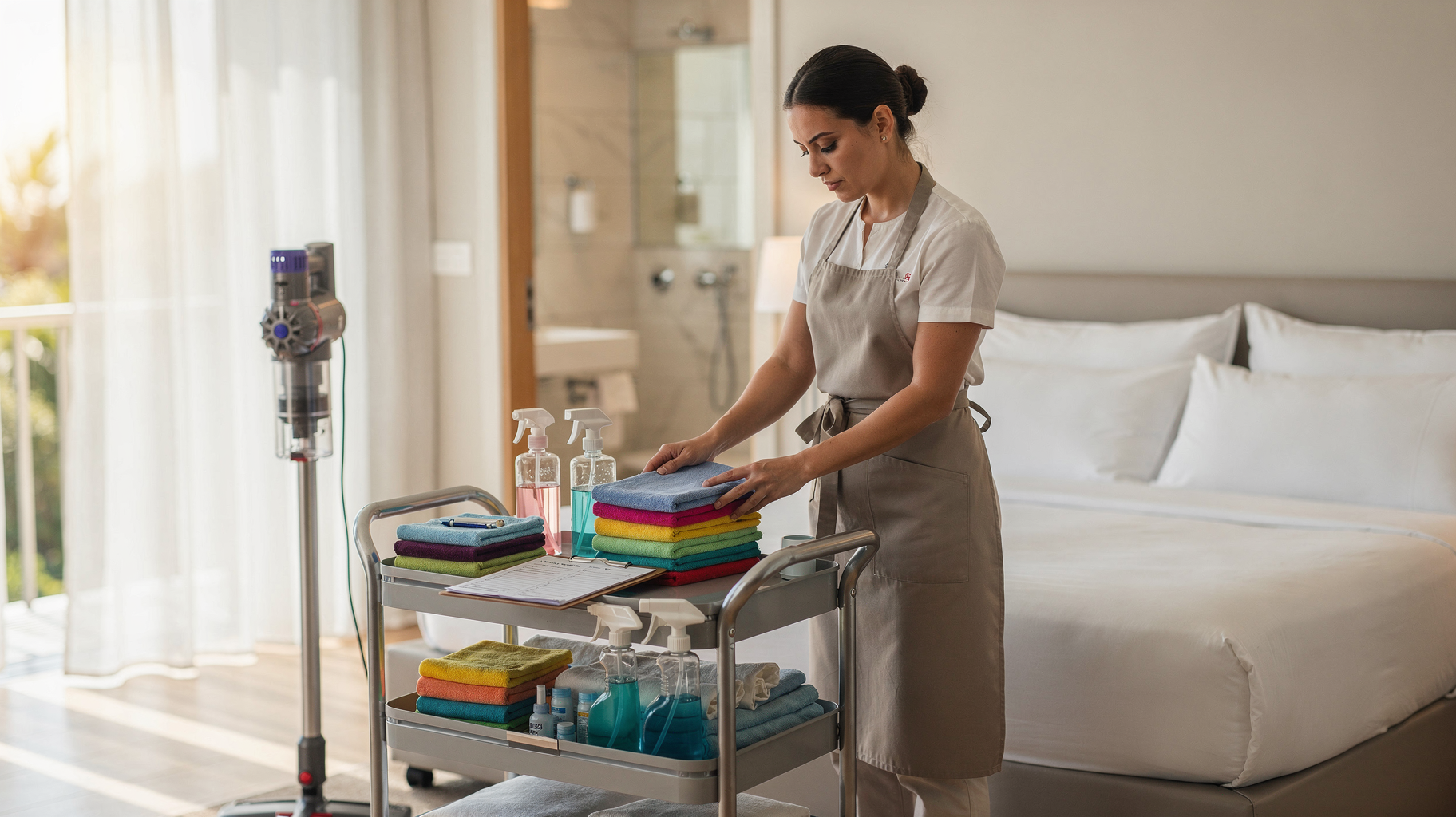
A fast turnover is not just about cleaning more quickly; it is about cleaning smarter. For short-term rentals and vacation rentals, the right toolkit can reduce mistakes, protect your standards, and improve the guest experience without adding stress to your property management routine.
As guest expectations rise, operational speed matters more than ever. Airbnb reported in 2025 that more than 80% of guests said cleanliness was one of the top factors influencing their review, and industry checklists from major vacation-rental operators continue to emphasize supply organization, automation, and room-by-room consistency as essential to efficient hosting. Properly designed cleaning kits help hosts move faster between stays while maintaining the polished finish that supports stronger ratings and better rental yield.
Why a cleaning toolkit matters in modern hosting
A turnover is a repeatable workflow, not a random set of chores. When cleaning supplies are scattered, missing, or stored inconsistently, cleaners waste time searching, backtracking, and improvising, which slows arrival readiness and increases the risk of errors. A well-built cleaning toolkit turns turnover into a predictable process that supports consistency across properties, team members, and seasons.
This matters especially in short-term rentals, where even small delays can affect check-in timing, same-day bookings, and the overall guest experience. A strong toolkit also supports better accountability because it makes it easier to verify what was used, what needs replacing, and what issues were discovered during the turnover.
What a turnover-ready cleaning toolkit should include
The best cleaning kit is not just a basket of products. It is a portable system built for speed, durability, and clarity. Industry cleaning guides for vacation rentals repeatedly recommend core supplies such as microfiber cloths, disinfectant wipes, glass cleaner, a vacuum, mop supplies, gloves, trash bags, and multi-surface cleaner because these tools cover the majority of turnover tasks efficiently. A practical toolkit should be arranged so a cleaner can move from room to room without returning to storage for basic items.
At a minimum, the toolkit should include the following:
- Microfiber cloths in a color-coded system for different zones, such as kitchen, bathroom, and general surfaces.
- Multi-surface cleaner and EPA-approved disinfectant for high-touch areas.
- Glass cleaner for mirrors, shower doors, and windows.
- Toilet cleaner, scrub brush, and grout-safe bathroom cleaner.
- Oven degreaser and kitchen-safe degreaser for stovetops, hoods, and appliance exteriors.
- Vacuum, broom, dustpan, mop, and bucket or spray mop.
- Trash bags, liners, paper towels, disposable gloves, and spare sponges.
- Laundry essentials, including stain remover, detergent, lint roller, and extra linens if you rotate them on-site.
- Small inspection tools such as a flashlight, replacement bulbs, and a notepad or digital checklist app.
Many hosts also keep a separate “reset” pouch with fresh toiletries, coffee supplies, toilet paper, tissues, and other consumables so restocking happens in the same pass as cleaning. That reduces back-and-forth trips and helps maintain par levels across each unit.
How to design the toolkit for speed
The fastest turnovers happen when the kit is built around workflow, not product categories. In practice, that means grouping tools by task and placing them in the order they are used. Cleaners should be able to enter a property and immediately begin a top-to-bottom process without sorting supplies first.
One of the most effective methods is to create a layered system. Keep one portable caddy for daily turnover items, one larger tote or cart for backup supplies, and one locked storage area for bulk refills and chemicals. This structure minimizes clutter while ensuring that essential items are always available. It also helps reduce supply loss, which is especially useful for larger portfolios in property management.
- Keep the most-used items in the top layer of the kit so they can be grabbed instantly.
- Use transparent bins or labeled pouches so team members can see what is missing at a glance.
- Store all chemicals in their original containers with clear labels, then keep them secured in a single compartment.
- Pre-sort cloths, sponges, and trash liners into standardized bundles for each turnover.
- Pack duplicate sets for high-demand items so cleaners do not pause to search for replacements.
Build your toolkit around the cleaning sequence
A good toolkit follows the natural rhythm of a turnover. Start with removal, then dusting and surface cleaning, then sanitizing, then final presentation. This sequence reduces rework and keeps clean areas from being contaminated again after they have already been finished.
For example, the kitchen should have its own set of supplies for wiping counters, emptying the fridge, and cleaning the microwave. Bathrooms need separate cloths and cleaners to prevent cross-contamination. Bedrooms benefit from a linen station that includes fresh sheets, pillow protectors, and lint removal tools. Outdoor spaces may need separate brushes, patio wipes, and a handheld blower or dustpan for entrances and decks.
By matching supplies to room function, hosts can shorten turnover time while making the work feel more intuitive. That is especially important in vacation rentals with multiple bedrooms, outdoor amenities, and frequent same-day changeovers.
Practical strategies that save time on every turnover
Cleaning speed improves most when the toolkit is paired with simple operating habits. The following strategies are easy to implement and deliver immediate value:
- Standardize every kit. Use the same supply layout for every property so cleaners do not need to relearn the system each time.
- Color-code by zone. Assign cloth colors or labeled spray bottles to kitchens, bathrooms, and common areas to reduce mistakes and cross-contamination.
- Restock immediately after each turnover. Refill paper products, soaps, and cleaning supplies before the next stay, not during the next turnover.
- Use checklists with photos. Visual standards help cleaners identify what “done” should look like, especially for bedding, towel presentation, and bathroom shine.
- Keep a backup kit. A second emergency kit prevents delays if a product runs out or a bottle is left behind.
- Track supply usage. Recording what is consumed helps you forecast demand and avoid last-minute shortages that slow down hosting operations.
Technology and automation can strengthen the toolkit
Modern property management increasingly depends on automation, and cleaning is no exception. Many vacation rental software platforms now allow hosts to assign cleaning tasks automatically after checkout, notify cleaners instantly, and track completion with notes or photos. That means the toolkit is no longer just physical; it becomes part of a larger operating system.
Automation also helps hosts identify where time is being lost. If one property consistently runs over schedule, the issue may be missing supplies, inefficient room layout, or too many products stored off-site. By comparing turnover times across properties, hosts can refine the toolkit and improve operational discipline without lowering standards.
At scale, these improvements can protect revenue by reducing vacancy hours between stays. For hosts focused on rental yield, that time savings compounds over a season and can make a meaningful difference in occupancy performance.
A guest-ready finish still matters
Speed should never replace polish. The best cleaning toolkit helps a team move quickly and still deliver the kind of finish guests notice: streak-free mirrors, fresh linens, odor-free rooms, stocked bathrooms, and a smooth check-in experience. That final presentation often shapes the first review more than any single amenity.
Guests booking short-term rentals are not comparing your property to an average apartment; they are comparing it to the best stays they have seen. A thoughtful toolkit supports that standard by making consistency easier to reproduce, even when turnover pressure is high.
It also creates confidence for hosts. When every supply has a place and every task has a tool, the entire turnover process feels more controlled, less stressful, and more scalable. That is one of the quiet advantages of strong hosting systems: they save time while preserving pride in the property.
In the long run, the best cleaning toolkit is not just about speed. It is about building a cleaner operation, a better guest experience, and a more resilient business model for vacation rentals. If you keep refining your system, each turnover becomes a little faster, a little smoother, and a lot more professional.
Small operational upgrades can transform the way you manage your property, and the toolkit is one of the simplest places to start. If this approach resonates with your experience, share your thoughts and join the broader hosting community conversation.